
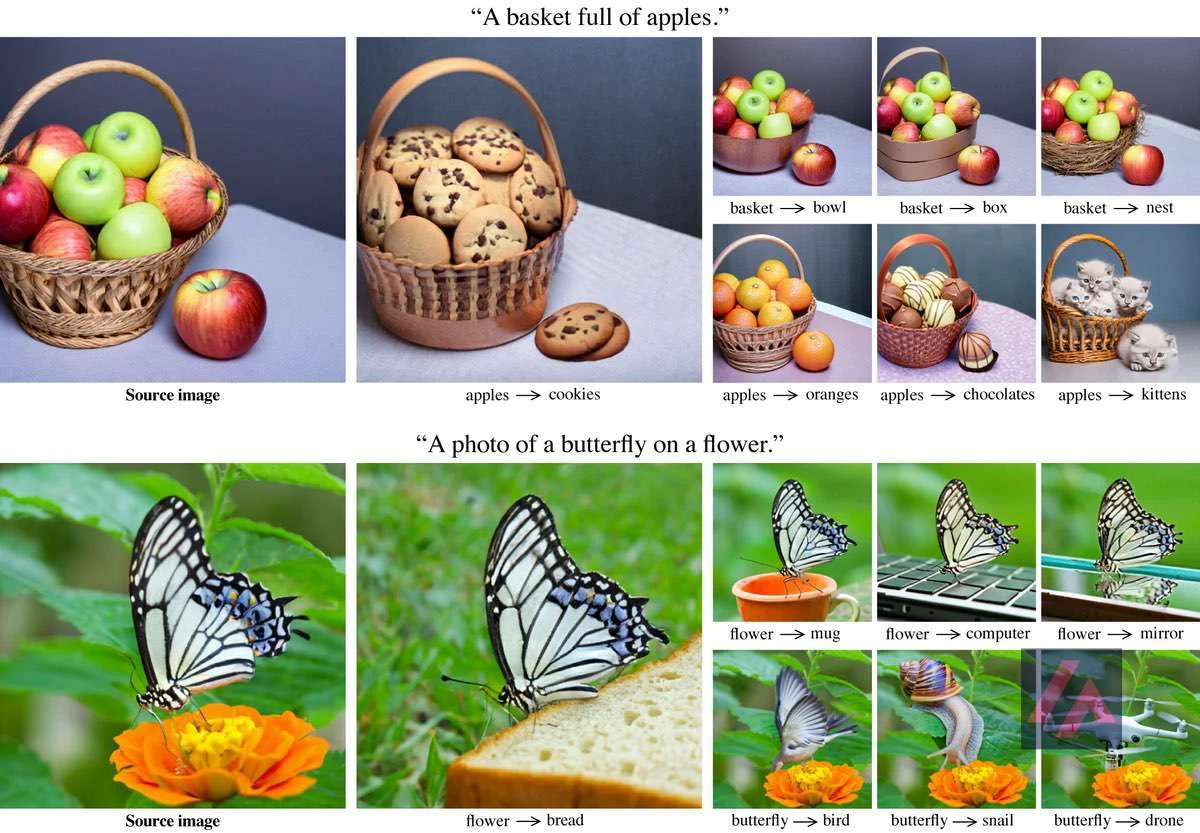

Prompt-to-prompt is a language generation technique using AI models. The basic idea is to train a model to generate an answer to a given question or prompt, and then use that answer as input to generate a new question or prompt, and so on. At each iteration, the model is “warmed up” with the previous output, allowing for a more accurate and consistent answer as it progresses through the dialog.
In some projects, such as this one, this technique is used to improve text generation in a conversational model, where the goal is for the generated responses to be consistent and maintain a logical context. The project may employ a variety of modeling and machine learning techniques to achieve this, and may also include a variety of metrics to evaluate model performance.
One potential application is in image generation, where a model trained with prompt-to-prompt could generate coherent and related images from an input image or prompt. This could be useful, for example, in generating sketches from a verbal description or in generating images of a building from a floor plan.
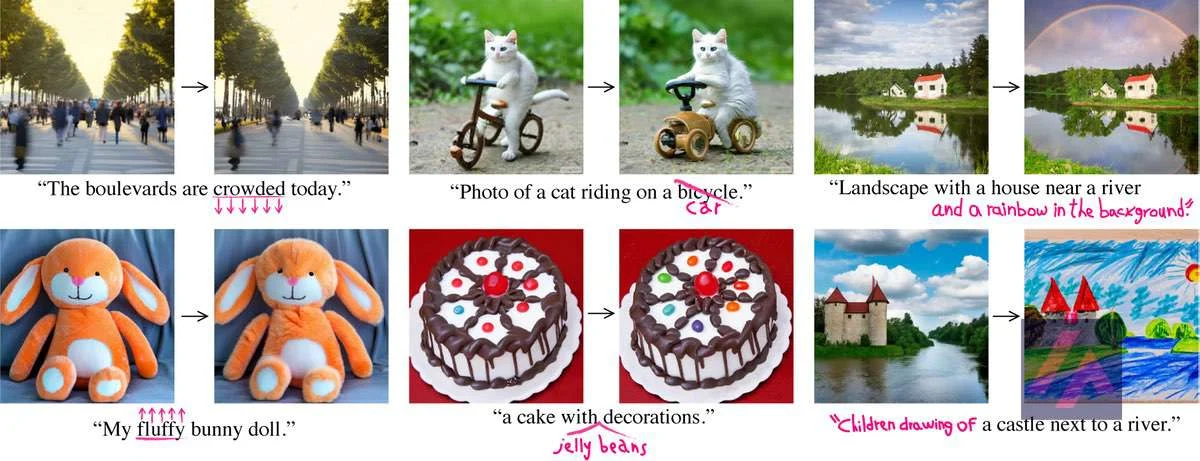
Example of the use of this technique applied to images. With a changing text we are able to modify elements of an image so that it evolves according to the need.
Another application is in image editing, where a model trained with prompt-to-prompt could edit a given image based on a given set of prompts or commands. For example, it could remove unwanted objects from an image or adjust color or exposure based on a set of specifications.
Examples of use:
- Chatbots: One of the most common applications is in chatbots. By training a prompt-to-prompt model, you can improve the chatbot’s ability to maintain a coherent and natural conversation, and to better understand and respond to the user’s questions.
- Poetry and literature generation: A prompt-to-prompt model can also be used to generate poetry or stories automatically. By training a model with examples of poetry or literature, the model is able to generate coherent and creative text in the same style.
- Generating answers in a forum or chat: In a forum or chat, answers to questions or comments can be generated automatically through a trained prompt-to-prompt model. The idea is that the answer is coherent and relevant to the context of the conversation and that it responds appropriately to the question or comment.
- Generating questions in an automatic questionnaire: Another interesting application is to generate questions in an automatic questionnaire, where the model uses the answers given to generate related and relevant questions for the user.
- Improve subtitle generation: subtitle generation can also be improved, so that the generated text is coherent and relevant to the context of the video, and so that the subtitle follows the conversation in a natural and coherent way.
In IT since 2002: systems, engineering, web development and SEO. I have been doing business with AI since February 2023, when ChatGPT could first be bought in Spain.

Anything left unclear? Ask me
I’m Miguel Ángel, and I’ll answer you myself, right here. And if something is out of date, tell me and I’ll fix it.