SynthID
Google DeepMind · also called SynthID Detector, Google SynthID · 8 min read
- Free
- Image
- Web

My verdict
In IT since 2002: systems, engineering, web development and SEO. I have been doing business with AI since February 2023, when ChatGPT could first be bought in Spain.
SynthID is the invisible watermark Google DeepMind puts in content made with its AI, and the SynthID Detector at synthid.com is where anyone can check for it. It's free, but you have to sign in with Google, Apple or ChatGPT first. In my test it got both answers right: a real photo came back "not detected," and a cropped screenshot of an image Gemini made for me came back "detected." Just keep in mind that it only recognizes AI from Google and its partners, so "not detected" never means "made by a human."
What is SynthID
- Company
- Google DeepMind
- Type
- Image
- Platforms
- Web
- Free plan
- Free
- Also called
- SynthID Detector, Google SynthID
- Updated on
- Oct 12, 2026
SynthID is an invisible watermark that Google DeepMind builds into content made with its AI, and the SynthID Detector at synthid.com is where you check for it. Is it free? Yes, but you have to sign in with a Google, Apple or ChatGPT account before it will look at anything. It checks images, video and audio, and it only recognizes AI from Google and its partners: OpenAI, NVIDIA and Kakao, with Apple announced as coming soon.
I tested it with two images, a real photo and one that Gemini made, to see whether it could tell them apart. It did, and the way it did is worth knowing before you trust it.
What SynthID actually is
Visible logos can be cropped out, and metadata gets stripped, for example when someone takes a screenshot. SynthID goes into the content itself: into the pixels of images and video, and into the sound of audio clips. You can't see or hear it, but a detector can. Google also uses it for text in the Gemini app and on the Gemini website, where it works by nudging the words the model picks.
The scale is huge. On October 7, 2026, Google said that since 2023 it has watermarked over 180 billion images and videos, plus 240,000 years of audio. That same day the Detector, which had been an early version for journalists and other media professionals, opened to everyone, worldwide and in English.
It's not a general AI detector (Important)
The Detector says so itself: it can only spot media from the companies in the program. A picture from a generator outside the program will come back "not detected," exactly like a photo you took with your phone.
How I tested the SynthID Detector
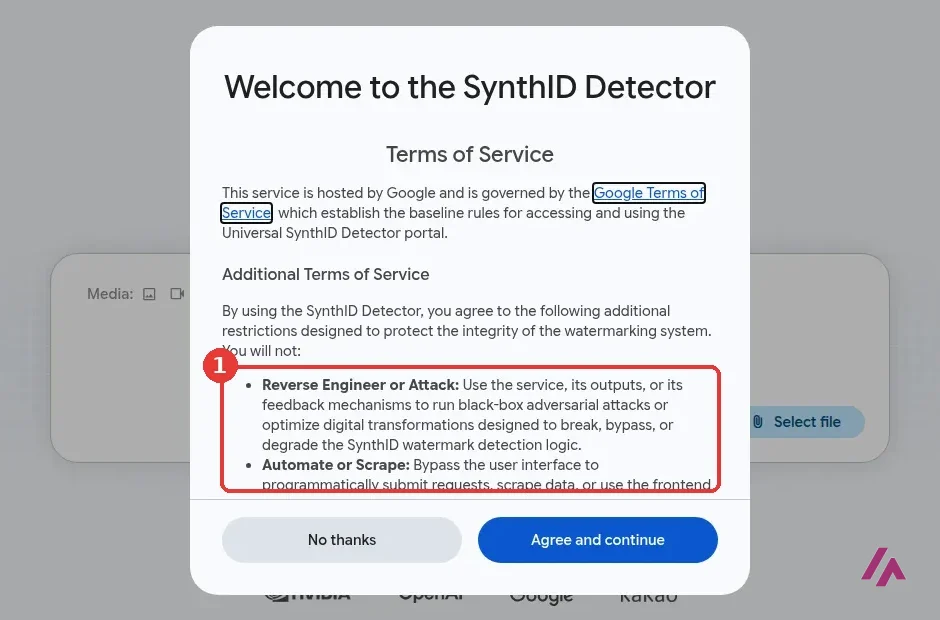
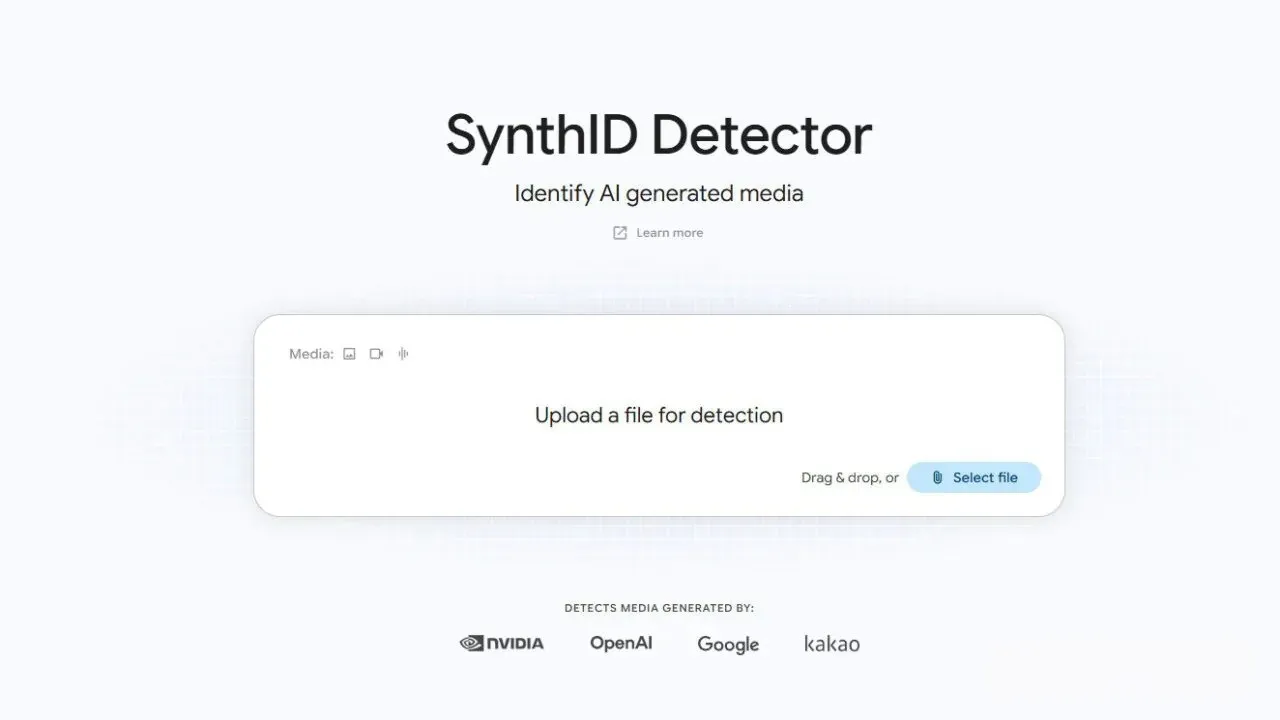
When you open synthid.com, the first thing you get is a terms dialog. Besides Google's usual terms, it lists things you agree not to do, like breaking or bypassing the watermark detection, automating or scraping the tool, and creating several accounts to get around the quotas.
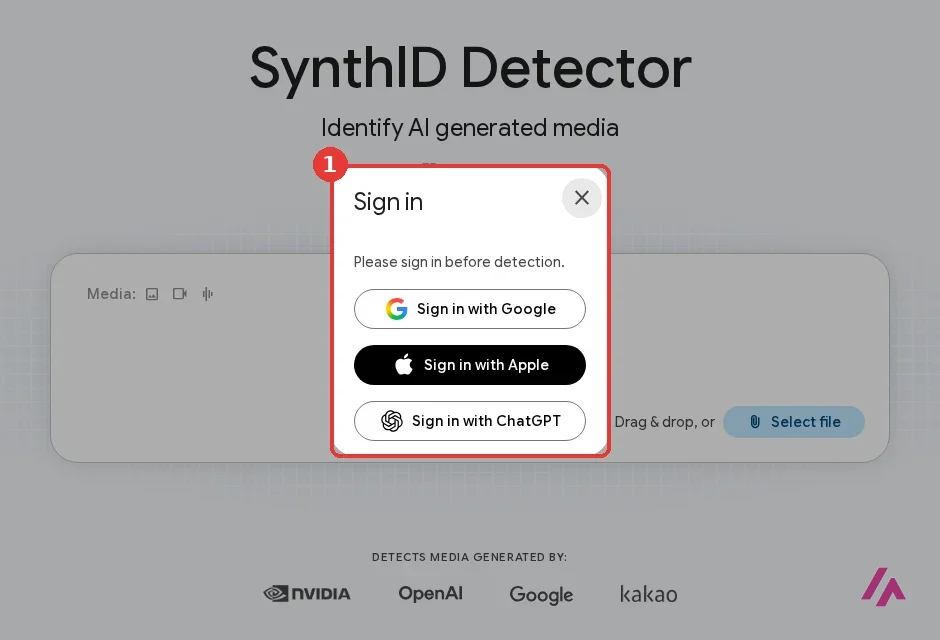
Then I tried to upload a photo without an account, and it stopped me with "Please sign in before detection." You can choose Google, Apple or ChatGPT. Under the upload box it lists whose AI it detects: NVIDIA, OpenAI, Google and Kakao.
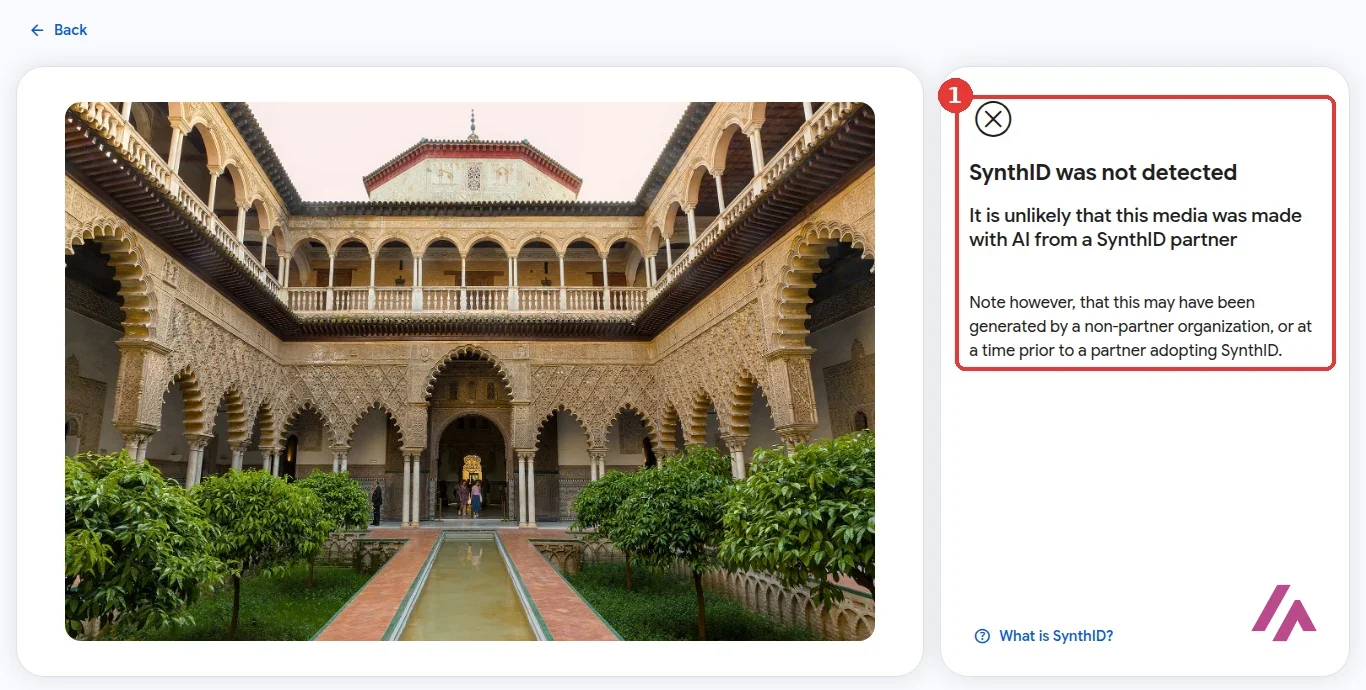
I signed in with Google and started with the control: a real photo of the Patio de las Doncellas in the Real Alcázar of Seville, taken by a photographer and shared on Wikimedia Commons. The answer: "SynthID was not detected. It is unlikely that this media was made with AI from a SynthID partner." It added that the image could still have come from a company outside the program, or from before a partner started using SynthID.
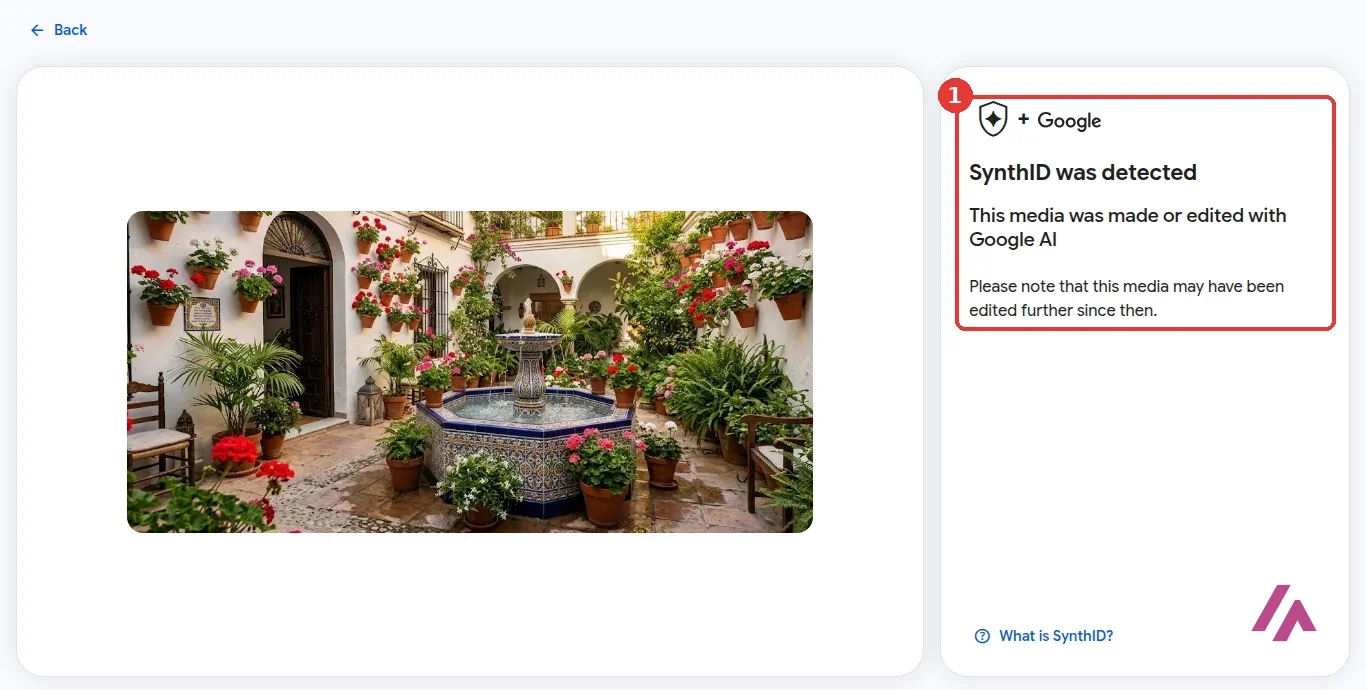
Now the hard one. About a week earlier, Gemini had generated an Andalusian patio in another test of mine, but I hadn't kept the original file. All I had was a screenshot of the conversation. So I cropped the image out of that screenshot: a smaller copy that had already been re-saved a couple of times in different formats, which is about as rough as you can be on a watermark. The Detector still said "SynthID was detected. This media was made or edited with Google AI" (it's the screenshot at the top of this review).
Upload the best file you have (Tip)
The Detector asks you to upload the highest-quality file possible. Mine survived a screenshot and a crop, but heavy compression and editing make detection harder, so if you can get the original file, use that.
Two things I expected and didn't see: it didn't highlight which part of the image carried the watermark, and it didn't show a counter showing how many checks I had left.
What "detected" and "not detected" really mean
"Detected" is the strong answer. It means there's a SynthID watermark, so the content was likely made or edited with an AI model that uses SynthID. Google's FAQ says that in very rare cases it can trigger on content without a watermark, so it's a strong signal, not absolute proof.
"Not detected" is the weak answer. According to the FAQ, it doesn't totally rule out AI. The content may come from a model without SynthID, from before a partner adopted it, or it may have been edited heavily enough to wear the signal down. Google also admits that someone who tries many transformations may find one that doesn't get detected. So use "not detected" as one clue, not as a verdict.
What the Detector can't check
- Text. The new Detector handles images, video and audio only. The early version checked text too; this one doesn't.
- AI from outside the program. Google, OpenAI, NVIDIA and Kakao today, Apple later. Everything else is invisible to it.
- Old content. Anything made before a partner started watermarking won't carry the mark.
Other ways to check for SynthID
You don't have to go to synthid.com every time. Google says the Gemini app, Search and Chrome can check for a SynthID watermark too: you upload the image, video or audio and ask whether it was created or altered by Google AI. These checks already handle over 1 million requests a day.

| Where | Account | What you can check | Whose AI it sees | Cost |
|---|---|---|---|---|
| synthid.com | Google, Apple or ChatGPT | Images, video, audio | Google, OpenAI, NVIDIA, Kakao | Free |
| Gemini app, Search, Chrome | Varies by app | Images, video, audio (upload and ask) | Google AI | No price listed |
| SynthID Text (code) | None | Text from your own model | The model you add it to | Free, open source |
If you already use Gemini, that's the quickest way to check a picture someone sent you.
SynthID Text, for developers
Here's the bit that confuses people: SynthID Text isn't a website where you paste an essay. It's open-source code from Google DeepMind (Apache 2.0) that developers add to their own language model so its output carries a watermark, and it works with Hugging Face Transformers. If you're a teacher hoping to check homework, this won't help you.
Your files and the rules you agree to
The Detector's privacy notice says your files are processed in real time and deleted as soon as you get the result. To enforce the daily quota, it keeps a digital signature of each file for 24 hours, then deletes that too. I still wouldn't upload anything confidential, but it's a reasonable deal for a free check.
The terms also rule out attacking or bypassing the watermark detection, so I won't be covering how to remove SynthID. My take: if you want to know where an image came from, this is the easiest free check right now, as long as you remember the one thing "not detected" can't tell you.
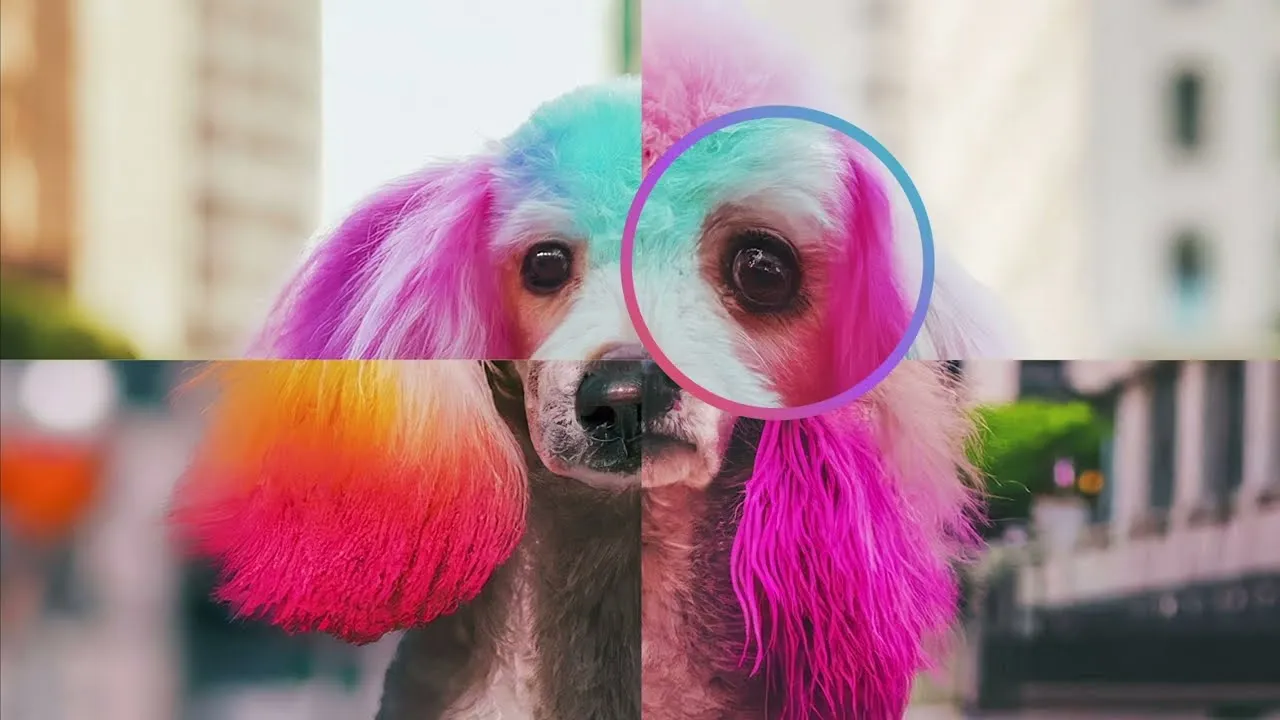
Google DeepMind's own two-minute explainer of how SynthID adds an invisible watermark to images, video and audio. It's from May 2024, before the Detector opened to everyone.
Who is it for? For anyone who wants to know whether an image, video or audio clip came from Google's AI or a partner's: journalists, teachers, moderators, or you before sharing that photo that looks a bit too perfect. If you need to check text, or images from Midjourney and the like, this isn't the tool.
What I like and what I don’t
What I like
- It got my two test images right, including a Gemini image I had shrunk, screenshotted, cropped and re-saved.
- It's free and works with an account you probably already have: Google, Apple or ChatGPT.
- The results say exactly what they mean, and the "not detected" message reminds you it may still be AI from a company outside the program.
What I don’t
- You can't check anything without signing in, not even one image.
- It only sees content from Google, OpenAI, NVIDIA and Kakao, so it's no help with images from Midjourney or other generators outside the program.
- It doesn't check text anymore, and it didn't show me which parts of the image carried the watermark.
Have you used SynthID? Tell me how it went
What worked for you and what didn’t. Your experience helps the next person who lands here unsure more than any review page. I read every one before publishing.
Write my review
SynthID pricing
Prices checked on the official site on · VAT included
-
Free
Free
Checks images, video and audio for a SynthID watermark; you need to sign in with Google, Apple or ChatGPT, and there's a daily usage quota
The SynthID Detector costs nothing. You need a Google, Apple or ChatGPT account to sign in, and there's a daily usage quota, though synthid.com doesn't say how many checks it allows. I didn't see any paid plan.
Alternatives to SynthID
-

Gemini
Free with limits · from $4.99/mo
When to pick it: If the image was probably made with Google AI and you already use Gemini: upload it to the chat and ask whether it was created or altered by Google AI.
See details → -

ChatGPT
Free with limits · from $8/mo
When to pick it: If the images you need to check come from OpenAI's tools: OpenAI is one of the SynthID partners, so the Detector can recognize them, and your ChatGPT account is enough to sign in.
See details →
How I tested it
On October 9, 2026, I opened synthid.com in a browser set to US English, accepted the terms, tried to upload a photo without an account, and then signed in with a Google account. I checked two images, one upload each: a real photo of the Patio de las Doncellas in the Real Alcázar of Seville, and a cropped screenshot of an Andalusian patio that Gemini had generated. My screenshots in this review are from that session.
A short video, posted the day after the Detector opened to everyone, on how to check a photo, video or audio track at synthid.com. Under three minutes, if you'd rather watch than read.

Written by Miguel Ángel, with the help of an LLM to fact-check. In IT since 2002 (systems, engineering, web development and SEO), doing business with AI since February 2023, when ChatGPT could first be bought in Spain. I build, write and maintain this site myself.

Got a question? Ask me
About SynthID, its plans or whether it fits what you need. I’m Miguel Ángel, and I’ll answer you myself, right here.