
Sesame AI: Voice Agents You Call or Text, Plus an Open Speech Model
Sesame AI, Inc. · also called Sesame AI · 11 min read
- Education
- iOS · Android · Web
Price Free to download on the App Store and Google Play. Google Play lists in-app purchases, and Sesame's site…
Checked on October 8, 2026
My verdict
In IT since 2002: systems, engineering, web development and SEO. I have been doing business with AI since February 2023, when ChatGPT could first be bought in Spain.
Sesame isn't a content generator, whatever this page used to say. It's the company behind a voice-first assistant app, Sesame: Personal Agents, and behind CSM-1B, an open speech model for developers. In the app you pick one of four agents (Maya, Miles, Simone or Charlie) and call or text them; with your permission, Sesame says, they can work with Gmail, Google Calendar and Drive, browse the web and run tasks on a schedule. It's free to download on iPhone and Android, Sesame publishes no price, and it officially supports English only. If you think better out loud and want an assistant you can actually talk to, it's worth a try. If you need another language, or one assistant for documents and code, ChatGPT, Claude or Gemini are safer bets.
What is Sesame
- Company
- Sesame AI, Inc.
- Type
- Education
- Platforms
- iOS · Android · Web
- Also called
- Sesame AI
- Updated on
- Oct 8, 2026
Sesame is the company behind two things worth knowing about. The first is an app, Sesame: Personal Agents, where you pick one of four voice agents (Maya, Miles, Simone or Charlie) and call or text them; with your permission, Sesame says, they can also work with Gmail, Google Calendar and Google Drive. The second is CSM-1B, the open text-to-speech model it released for developers. The app is free to download on iPhone and Android, Sesame publishes no price, and the app officially supports English only.
I'm Miguel Ángel, and I wrote this with help from an LLM to verify facts. Below: what the app does by Sesame's own account, what I could open without signing up, what it costs (or doesn't), where the open model fits, and what I'd use instead.
First, which Sesame?
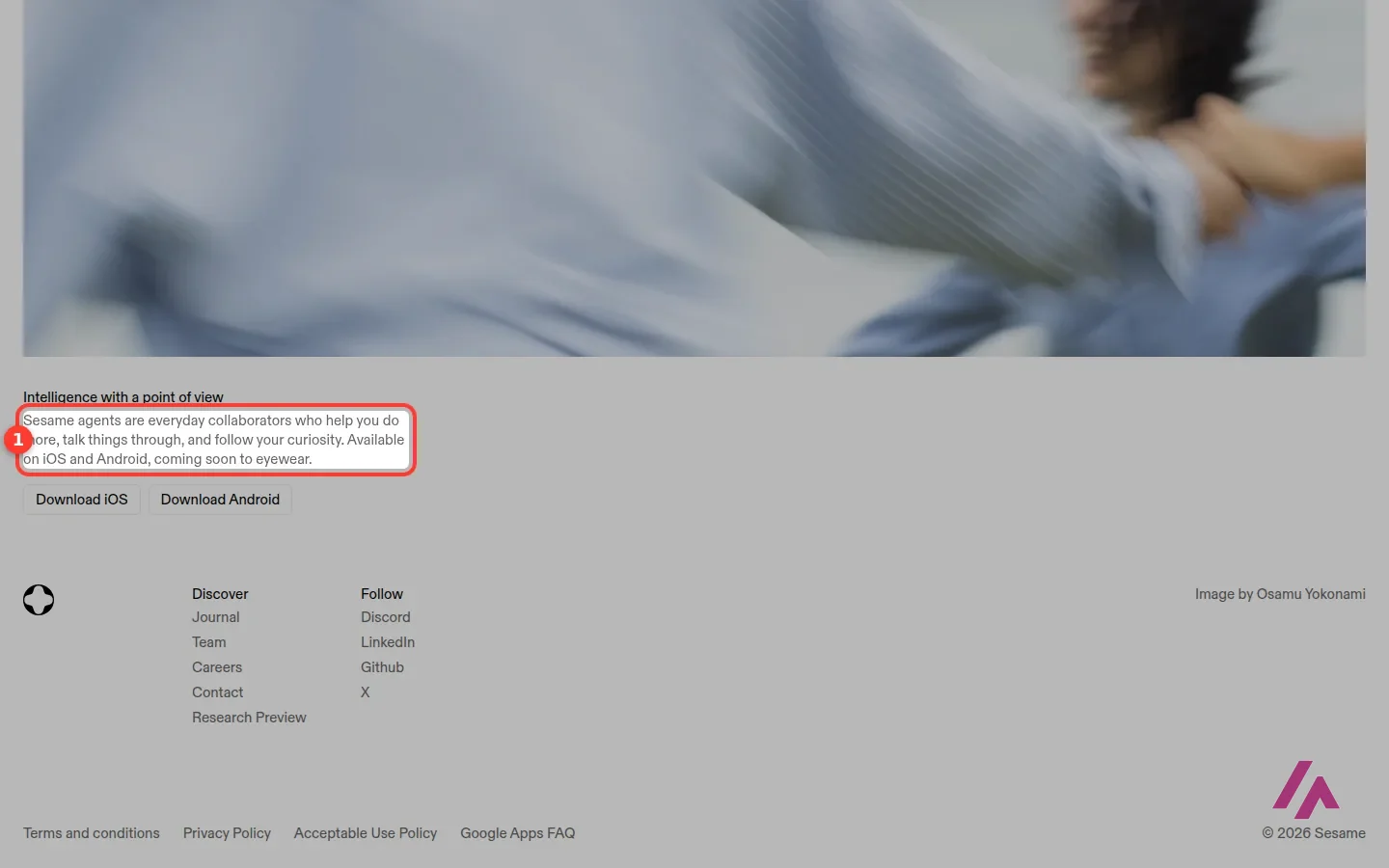
For the record: until this rewrite, this page described Sesame as a content generator for teachers and writers. That's not what the company at sesame.com makes. Sesame first appeared in February 2025 with a voice demo and a research post on what it calls conversational speech; Maya and Miles were its first two characters. Since then it has turned that research into a product. Its home page today reads "Intelligence with a point of view" and describes Sesame agents as "everyday collaborators who help you do more, talk things through, and follow your curiosity."
The company's full name is Sesame AI, Inc. Its team page names Brendan Iribe, Ankit Kumar, Ryan Brown, Angela Gayles and Nate Mitchell as its leaders and lists a16z, Sequoia, Spark and Matrix among its backers.
The app: four voice agents you call or text
The app came out on iPhone in May 2026 as a preview, and it's on Google Play now too. You choose from four characters, each with its own voice and personality. Sesame describes them like this: Maya is "a witty collaborator with boundless imagination," Miles "a laid-back conversationalist who tells it like it is," Simone "a dynamic thought partner with a knack for deep-dives," and Charlie "a casual sounding board who helps you work things out." Sesame says it develops them the way a writers' room develops characters for TV, which explains why the descriptions read like a casting sheet.
The idea is that you call one and think something through out loud, or you text when you can't talk. According to Sesame's getting-started guide, the agents can answer in text with formatted "artifacts," reply to voice notes and send their own, and remember your past conversations when you're logged in. Memory stays with each agent, though: Maya remembers her conversations with you, Miles remembers his, and they don't share notes or app access. Sesame also offers an Incognito mode for conversations you don't want saved to memory.
What the agents can do with your apps
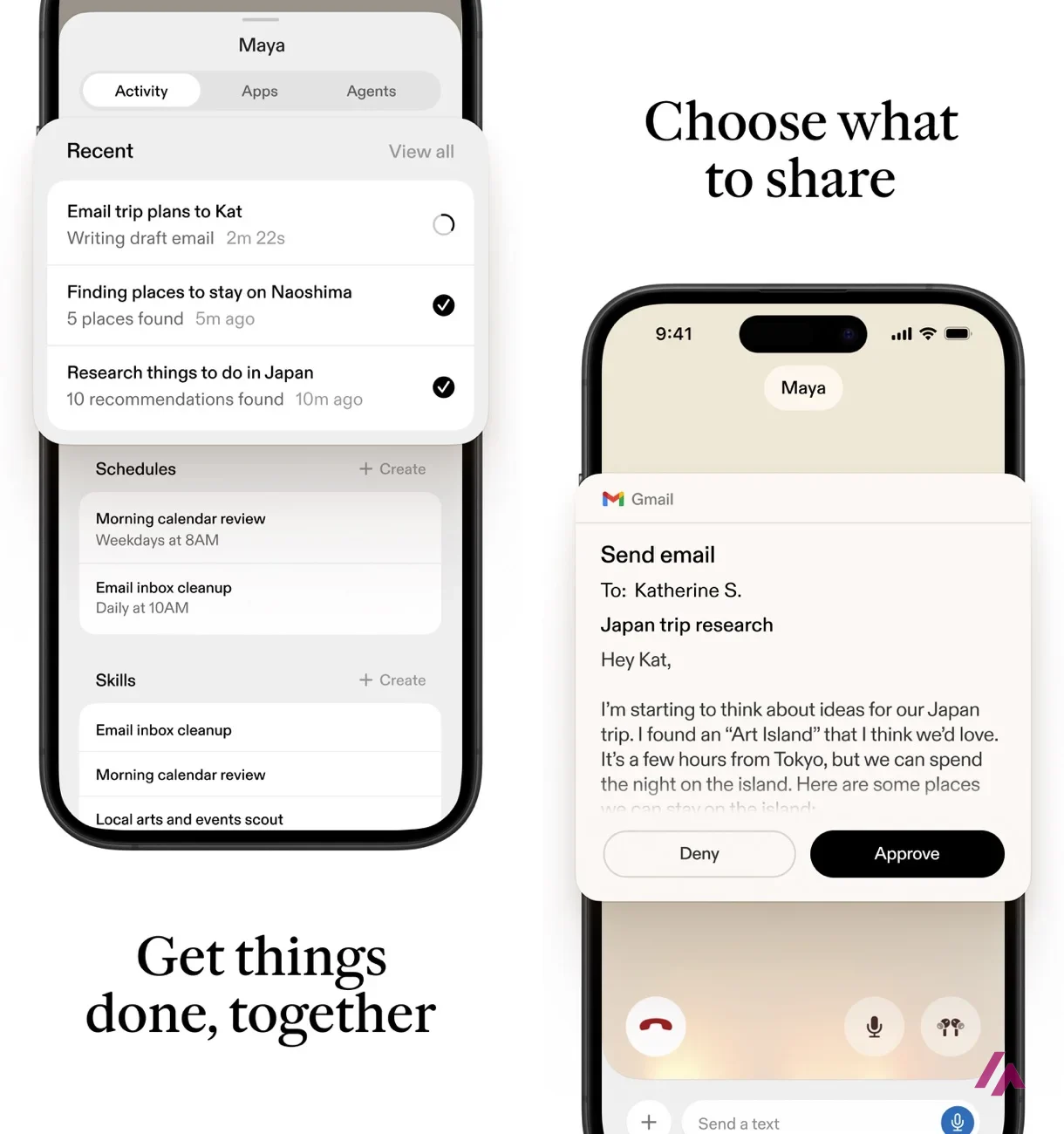
This is where Sesame becomes more than a nice voice. Sesame's October announcement says that "with the October release, each agent is now smarter, with access to its own computer," so an agent can browse the web, go off on a task and come back with an update when it's ready. Sesame says that, with your permission, the agents can also work with Gmail, Google Calendar and Google Drive, which you connect from an Apps page inside the app. Some connectors carry a Beta tag, and you can add outside MCP servers that sign in with OAuth (MCP is a standard way for AI assistants to plug into other services).
Sesame's Google apps FAQ spells out what that means. In Gmail, an agent can search and read your email, use labels, look up contacts, and draft and send messages "with your approval." In Calendar, it can create, change and delete events, find a time that works for everyone on shared calendars and set up recurring meetings. Sesame also says it doesn't train its models on data pulled directly from Gmail or Calendar, though what you paste into a conversation can be used if you allow model improvements.
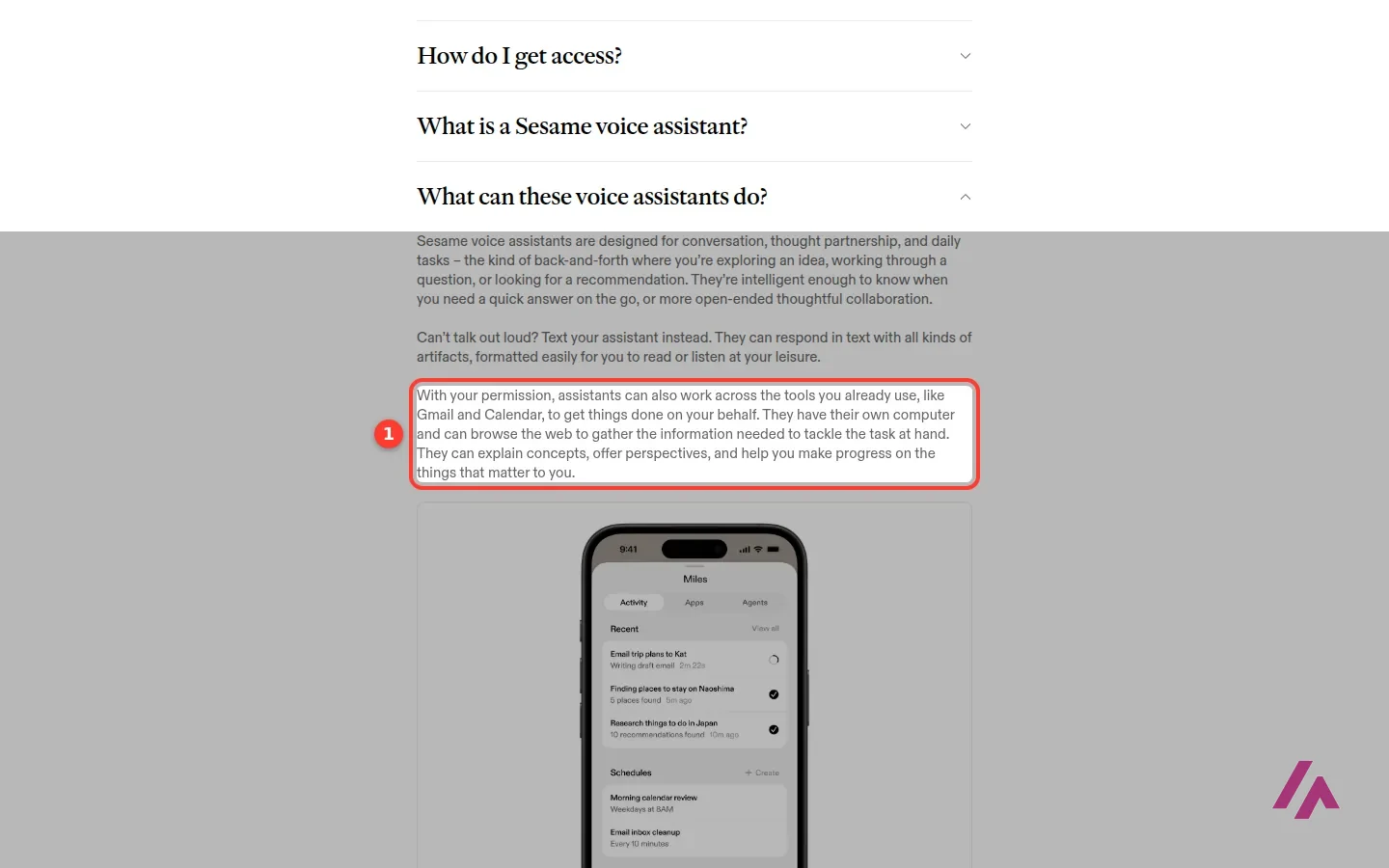
Then there are skills, which Sesame describes as "a plain-language playbook you build through conversation" that runs when you ask for it or on a schedule. Its example is a morning briefing that sums up your incoming email and the day's meetings. You set it up by explaining what you want, the way you'd brief a person.
Think before you hand over your inbox (Important)
Sesame says each agent gets its own app access, so you can let Maya into your email and keep Charlie out. Its own FAQ points out that Gmail and Calendar may contain sensitive information, and that in rare cases its team may review account data and conversations for safety, security or product quality. According to Sesame, you can disconnect an app at any time and turn off model improvements in the settings.
What I could try without an account
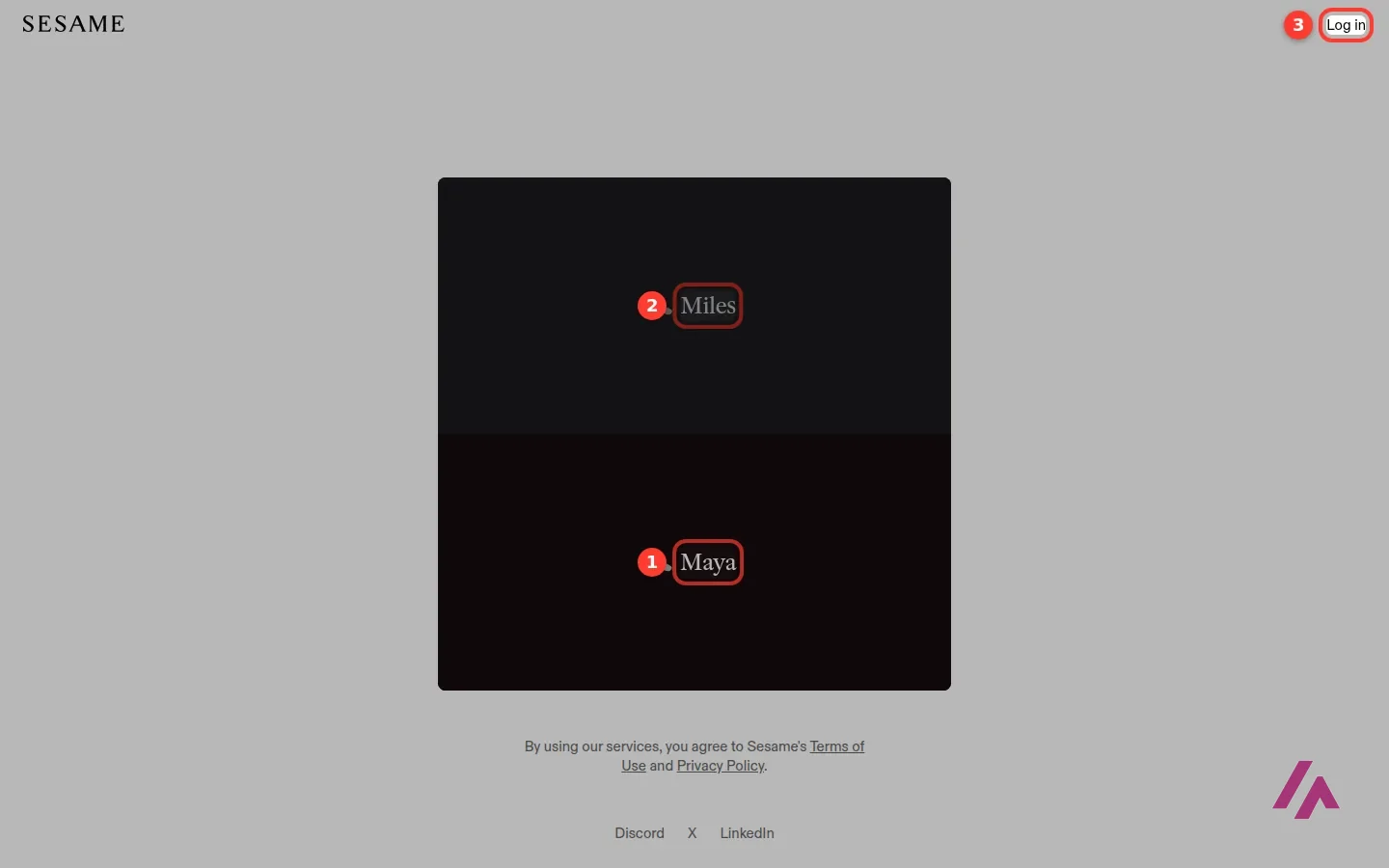
On the phone app you sign in with Google (or Apple, on iPhone) or, since a recent update, with an email address. Sesame's site also links to a web preview, so that's where I went. The welcome screen says you can "chat with Maya & Miles, Sesame's voice agents," and asks you to leave feedback at the end of your call. One click on Continue and you're looking at two big panels, Maya and Miles, each with a phone icon, plus a Log in link in the corner. A screenshot can't take you further than that: the call itself happens through your microphone, and that call is the quickest way to hear Sesame's voice before you install anything.
Price, languages and where it works
The short version: free to download, and no price on Sesame's site. The App Store lists the app as free, and Sesame's terms of use publish no prices or plans. Google Play does flag "In-app purchases," and the latest App Store release notes promise "better standard and Max Intelligence," so a paid option wouldn't surprise me; Sesame just doesn't say what it costs. In May, Sesame said the full experience was free during the first phase of the rollout, with a possible short waitlist. Its official videos from October say the assistants "are now available to all."
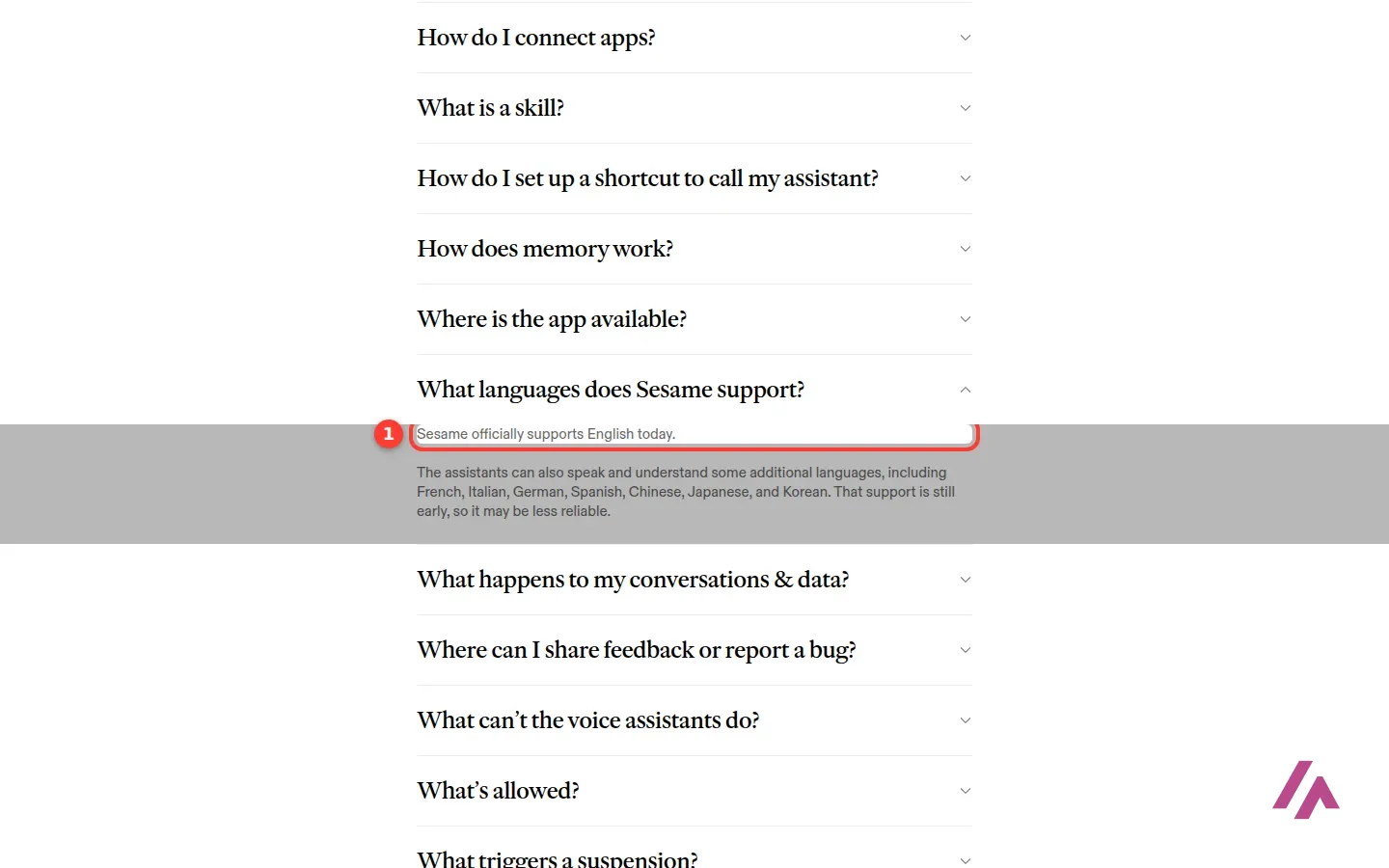
On languages, Sesame is clear: "Sesame officially supports English today." The agents can also speak and understand some French, Italian, German, Spanish, Chinese, Japanese and Korean, but Sesame calls that support "still early" and says it may be less reliable. The app is available in a long list of countries, including the US, the UK, Canada and Australia, and you have to be at least 18 to use it. On iOS it's listed as iPhone-only and needs iOS 18 or later.
A great voice is still a language model (Heads-up)
Sesame is upfront about it: its assistants use large language models, "which means they sometimes make things up," including details about Sesame itself. Its guide also says they're not a substitute for medical professionals, therapists, financial advisors or legal counsel. Treat a confident voice like a confident text answer, and check whatever matters.
CSM-1B: the open version of the model behind the voice
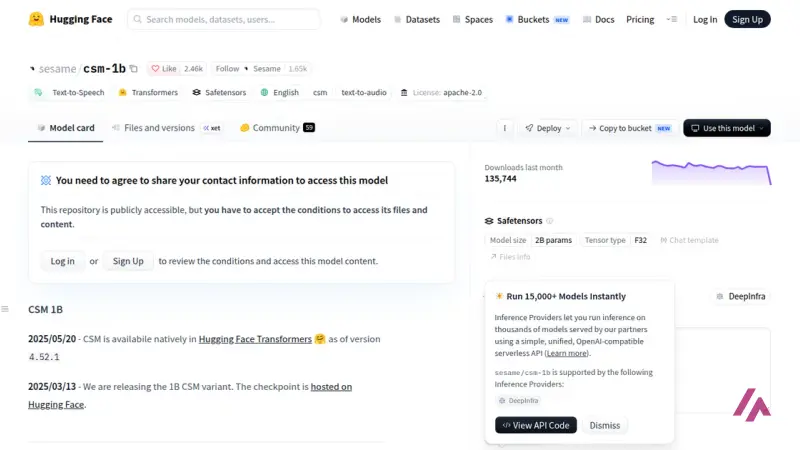
Sorry, a bit of jargon here. CSM stands for Conversational Speech Model: text-to-speech that uses the earlier turns of a conversation to decide how the next line should sound. Sesame released the smallest version, CSM-1B, in March 2025 under the Apache 2.0 license, with the code on GitHub and the model on Hugging Face. To download it there, you need a free account and have to accept Sesame's conditions. Its README asks for a CUDA graphics card (in practice, Nvidia). The model is built for English, comes with no ready-made voices and can't write text, so you pair it with a language model that does.
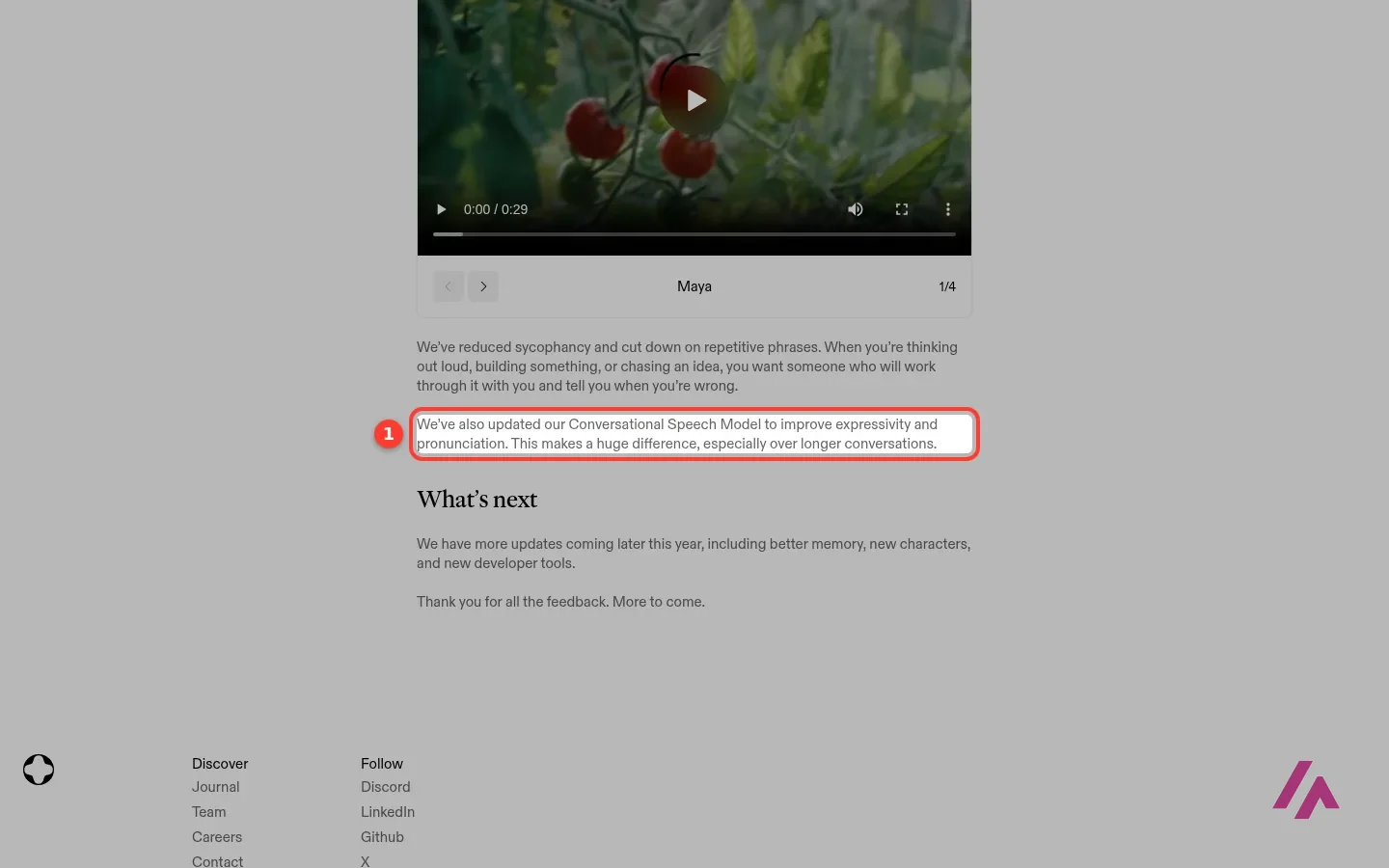
The app doesn't run that exact model. Sesame's README says a fine-tuned version of CSM powered the original Maya demo, and the October announcement says Sesame has "updated our Conversational Speech Model to improve expressivity and pronunciation." So CSM-1B is the open base model, and you shouldn't expect it to sound like Maya out of the box. Its demo on Hugging Face is still up, and the code on GitHub was last updated in May 2025. If you want the details, I wrote a full guide on what CSM-1B is, where to download it and what it needs.
The glasses, still a promise
Sesame's bigger plan is hardware. It says it's designing its glasses and its assistant "as one product," with the agents as the operating system for Sesame glasses, and that the collection will be made in Japan and arrive in 2027. It also says developer tools to build your own Sesame apps are coming later this year. You can't use any of that today, so I'd judge Sesame by the app on your phone, not by the frames.

Who it's for, and what to use instead
Try it if you think better out loud: planning a trip, working through a decision, digging into a hobby while you walk. It's free to download, the web preview opens without an account, and if you connect Gmail and Calendar, Sesame says the agents can draft emails and manage your schedule, with you approving what gets sent.
Look elsewhere if you need another language, you're under 18, or you want one assistant for documents, code and everything else. ChatGPT includes voice chats on its free plan, within limits. Claude has voice mode on its free plan and is the one I'd pick for long writing and code. Gemini is the obvious choice if your day already lives in Gmail, Docs and Drive (its paid plans bring it into Gmail and Docs). And if you're a developer who wants the voice model rather than the app, go straight to the CSM-1B guide linked above.
My take: Sesame treats talking as the main way to use an assistant, not as an extra mode, and now that it says its agents can act in your email and calendar, the app is more than a voice demo. But with no published price, English as the only official language and the glasses still due in 2027, I'd see it as a promising app worth an afternoon, not yet the assistant you build your workday around.
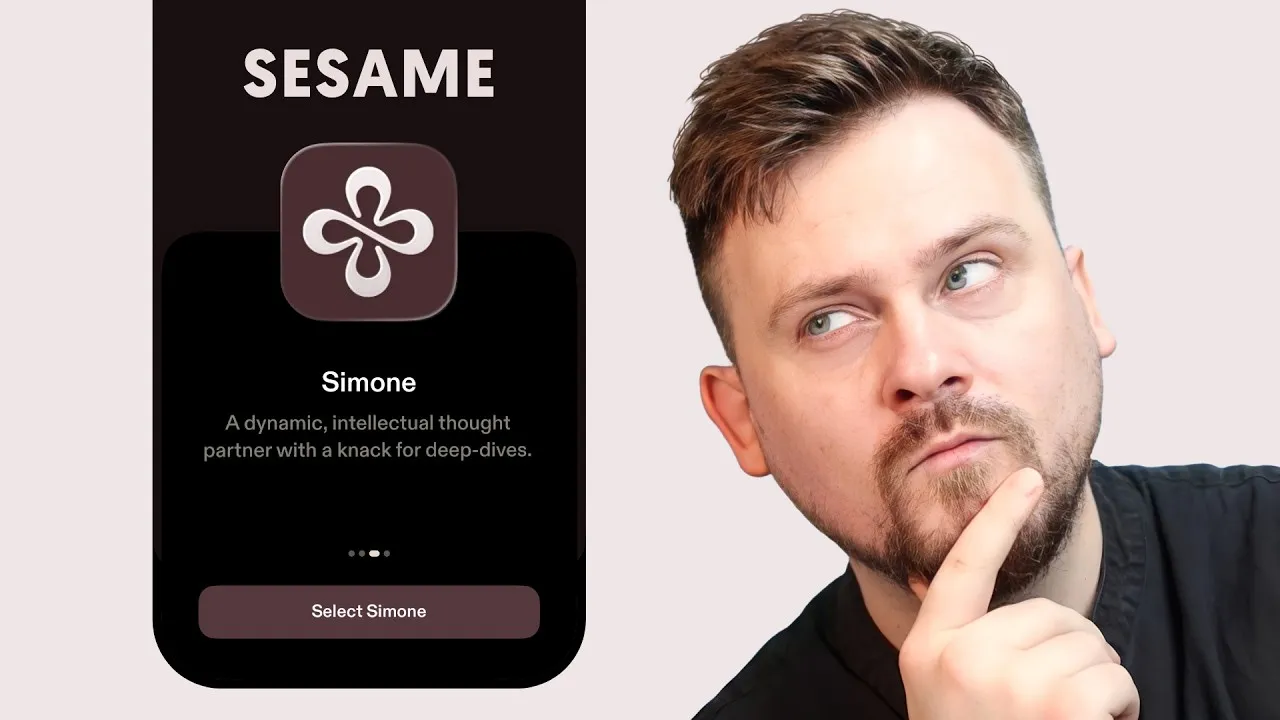
An official introduction to Simone, one of the four agents. Its description quotes the question the clip is built around: who was the first female chef to get a Michelin star? It's a short promo clip from Sesame's own channel.

Who is it for? For English speakers 18 and over with an iPhone or an Android phone who'd rather talk through plans, ideas and research than type them, and who are comfortable connecting Gmail or Calendar. Developers who want the voice model itself should read the CSM-1B guide linked on this page instead.
What I like and what I don’t
What I like
- Free to download on iPhone and Android, and the web preview opens without an account: one click on Continue and you're choosing between Maya and Miles.
- Sesame says you can call or text the same agent and switch between the two, with memory that carries across voice and text.
- App access is set per agent, and in Gmail the agents draft and send emails only with your approval, according to Sesame.
What I don’t
- Officially English only. Sesame says the other languages its agents understand are at an early stage and may be less reliable.
- No published price: the app is free to download, but its Google Play listing flags in-app purchases.
- You have to be 18 or older, and on iOS the app is listed as iPhone-only.
Have you used Sesame? Tell me how it went
What worked for you and what didn’t. Your experience helps the next person who lands here unsure more than any review page. I read every one before publishing.
Write my review
Sesame pricing
Free to download on the App Store and Google Play. Google Play lists in-app purchases, and Sesame's site publishes no price. The open CSM-1B model is free under the Apache 2.0 license.
Checked on October 8, 2026. That’s the price I put on this page, and these change often: check it on their site before you pay.
Alternatives to Sesame
-

ChatGPT
Free with limits · from $8/mo
When to pick it: If you want an all-round assistant with voice chats included, even on the free plan, within its limits.
See details → -

Claude
Free with limits · from $20/mo
When to pick it: If you mostly write long documents or code and still want to talk to it now and then: voice mode is on Claude's free plan.
See details → -

Gemini
Free with limits · from $4.99/mo
When to pick it: If your day already runs on Google's apps: Gemini is free to start, and its paid plans bring it into Gmail and Docs.
See details →
Guides about Sesame
-
Business applications
Sesame CSM: the open text-to-speech model from the team behind Maya
Sesame open-sourced a base version of the speech model family behind its Maya voice demo. Here's what CSM-1B really is, what you need to run it, and…

How I tested it
On October 8, 2026, I went through the US English version of Sesame's site without an account: the home page, the journal (including its getting-started guide and the October update), the Google apps FAQ and the terms, plus the app's US listings on the App Store and Google Play. I opened the web preview, clicked Continue and got as far as choosing between Maya and Miles; the voice call itself is the part you'll want to try with your own microphone. For CSM-1B I relied on the guide I wrote a few days earlier from its README and model page, and checked that its Hugging Face demo was still running. The screenshots are from that session; the images credited "Image: Sesame" are Sesame's own.
A hands-on video from Cloud English, a channel about practicing spoken English. It went up in June 2026, early in the app's preview and before the October update. The title promises a test and a look at the two voices that were new then. The description also promotes the channel's own English program, courses and a pronunciation tool.

Written by Miguel Ángel, with the help of an LLM to fact-check. In IT since 2002 (systems, engineering, web development and SEO), doing business with AI since February 2023, when ChatGPT could first be bought in Spain. I build, write and maintain this site myself.

Got a question? Ask me
About Sesame, its plans or whether it fits what you need. I’m Miguel Ángel, and I’ll answer you myself, right here.